Characters and events in this piece are composite illustrations drawn from typical cross-border journeys; all names are pseudonyms.
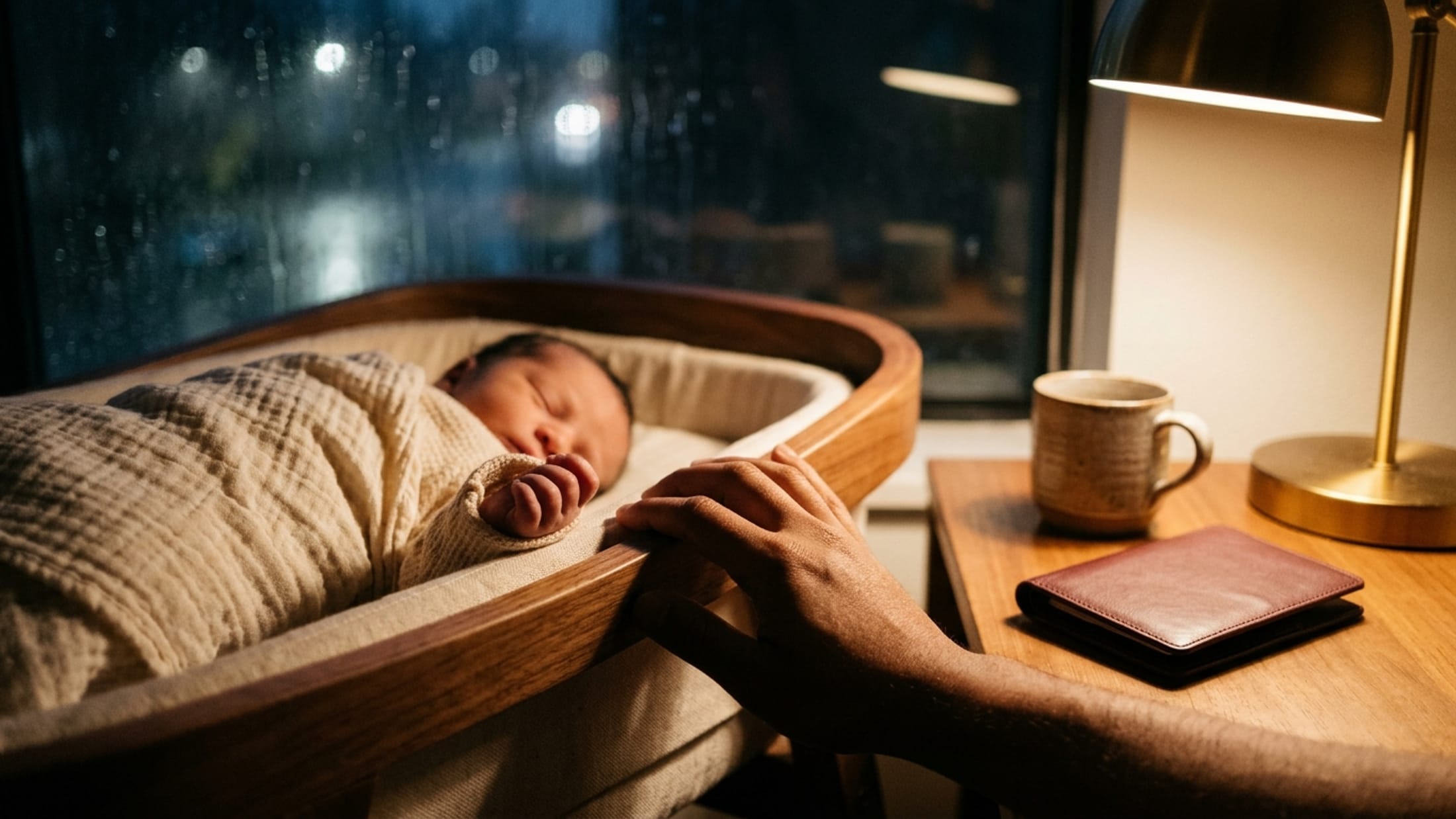
Four hours after their son was born in Yerevan, Chen Xu sent a voice note to his mother in Shanghai and went back to their rented one-bedroom off Northern Avenue to sterilise bottles. Sitting on the sofa with the hospital folder open on her lap, his wife Lin Wan turned to the second sheet and asked quietly, "What nationality is he right now?"
Their coordinator had explained the legal mechanics months earlier, yet holding a sheet of Armenian script made it visceral. Armenia grants citizenship by descent, not by place of birth. Until civil birth registration, Ministry of Justice Apostille certification, chain-of-custody DNA testing, and a Chinese Travel Document from the embassy were all complete, their seven-pound newborn possessed no passport to cross any border on earth.
The $50,000 "all-inclusive" contract they walked away from
Both architectural consultants in Shanghai, Chen Xu and Lin Wan had spent four years between clinics in Shanghai and Tokyo — finally banking embryos at a Shinjuku clinic — after severe adenomyosis and diminished ovarian reserve ruled out carrying a pregnancy herself. Before finding Lumina Vita, they had come within a day of signing with an operator introduced through an acquaintance.
That operator pitched a $50,000 "all-inclusive guaranteed" package over WeChat. Used to reading engineering specifications line by line, Chen Xu ran the English annex through a translation tool at midnight and spotted three traps buried in the fine print: sixty percent wired upfront into an offshore trading company's account, pricing denominated entirely in Armenian dram, and a $12,000 "re-coordination fee" if their own surrogate candidate failed pre-transfer medical clearance.
Lin Wan closed the chat thread that night. When they booked their first call with Lumina Vita months later, Chen Xu didn't ask about success rates; he asked for a blank contract and the milestone payment schedule. Seeing fixed USD pricing with every instalment tied to clinic or notary certificates was what finally got them to the table.
Alarms every three hours
Nothing, however, quite prepares new parents for the administrative limbo after delivery.
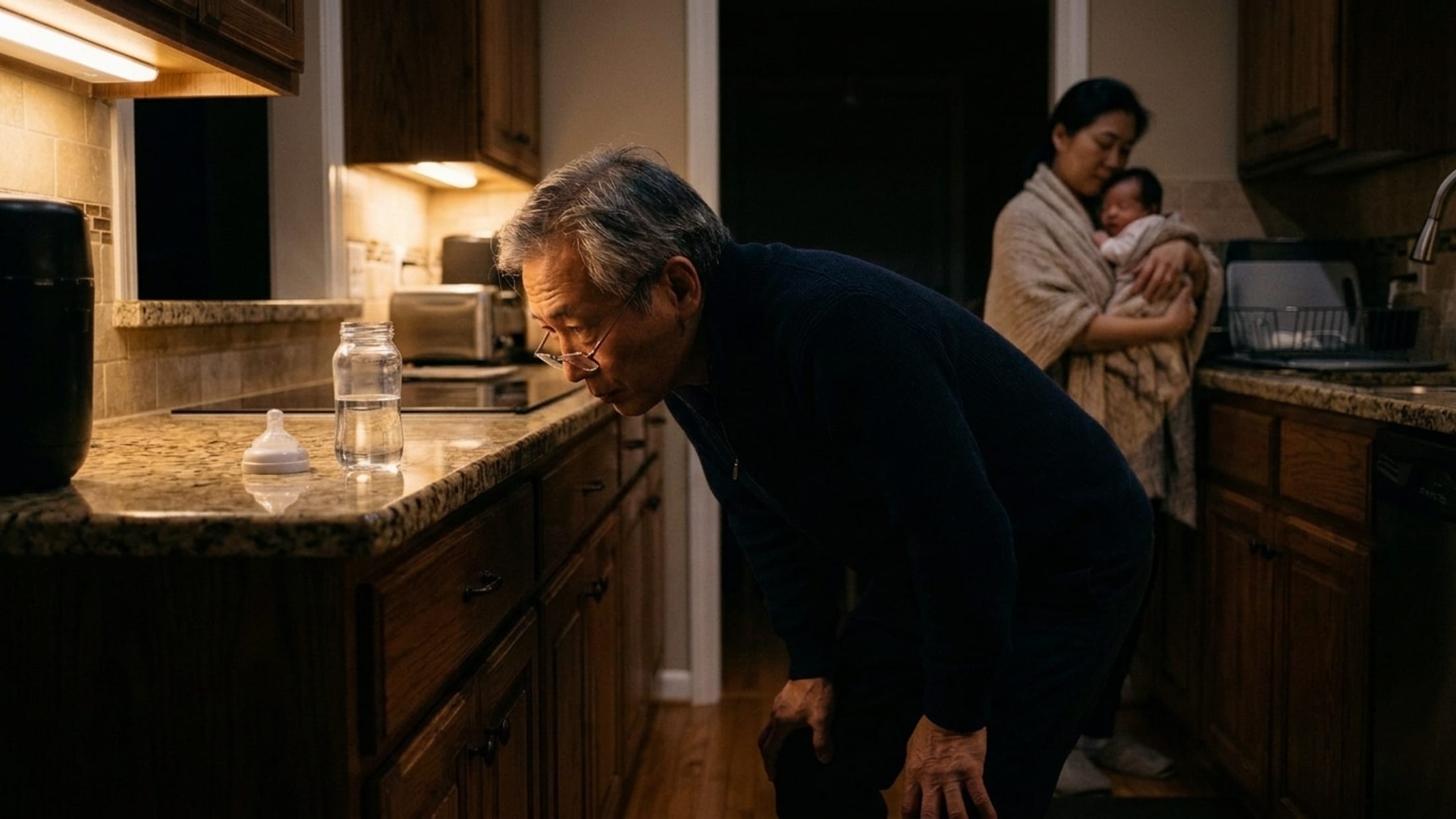
Veterans on international surrogacy forums call the birth "halftime," and living out of suitcases with a newborn makes clear why. By day, crisp autumn sunlight lit the pink volcanic stone rooftops outside their window; by night, phone alarms rang every three hours for formula, burping, and diapers while daytime hours revolved around government counters.
Each step unlocked the next: sworn translation and notarisation of the hospital record, civil birth registration, Ministry of Justice Apostille certification, online consular review, and cheek-swab DNA paternity sampling through a designated lab. Until one stamp dried, the next queue could not begin.
On day twelve, a two-day local public holiday shut the government registry counter. Standing on the narrow apartment balcony at dusk, Chen Xu scrolled three weeks ahead on his calendar, counting project deadlines back in Shanghai with his jaw clenched. That evening their coordinator stopped by with a bag of autumn pomegranates, infant vitamin D drops, and a reverse-dated schedule mapping lab turnaround, consular interview day, and wide-body flights via Doha — repeating one firm rule: watch seat inventory if you want, but do not ticket a single non-refundable fare until the booklet is in your hand.
Walnut pastry on the pavement
Their consular interview fell on the morning of day twenty-one. The night before, Lin Wan sorted every notarised original, photocopy, marriage booklet, and parent passport into a clear accordion folder, packing two spare sleepsuits in the diaper bag. At the window, the officer checked the sleeping baby against his photographs and accepted the packet without a hitch.
At 3:30 p.m. on day twenty-six, Chen Xu stepped out through the iron gate of the consular section holding a thin burgundy Travel Document. Inside, his son's eyes-shut portrait sat neatly beside three Chinese characters in the name field.
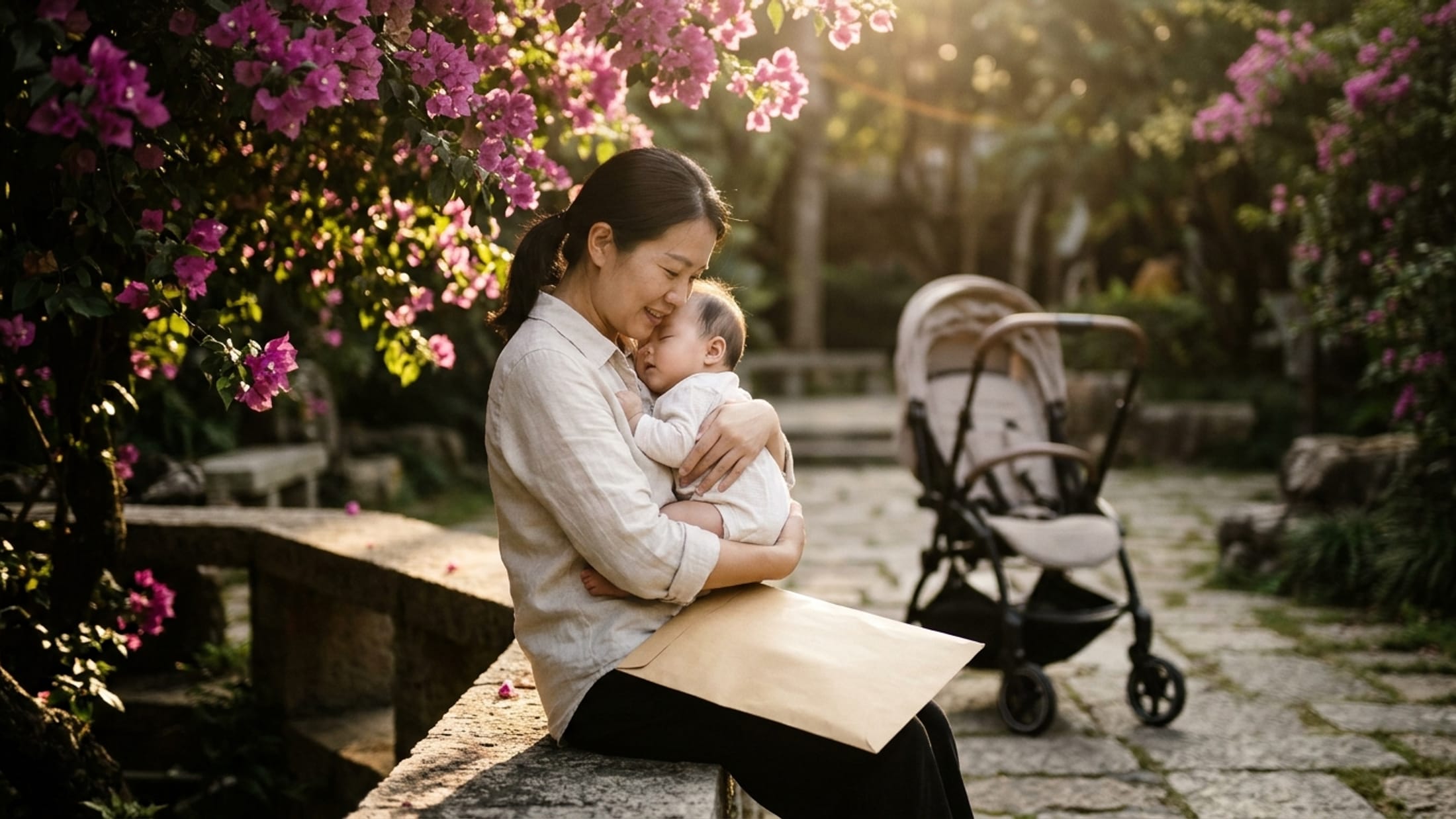
A late-October wind had picked up along the avenue. Lin Wan checked the page once and zipped the booklet into the inner pocket of her down vest. Passing the corner bakery whose butter-and-cinnamon smell they had walked briskly past for three weeks, Chen Xu pushed open the door and bought one warm walnut mille-feuille. They stood under the plane trees breaking off flaky pieces over the stroller hood, neither mentioning how many times they had checked flight schedules at four in the morning.
Disclaimer: this article is general information and not legal or medical advice. Before making any decision on the legal matters discussed, consult a licensed attorney in the relevant jurisdiction; for medical matters, consult a physician.