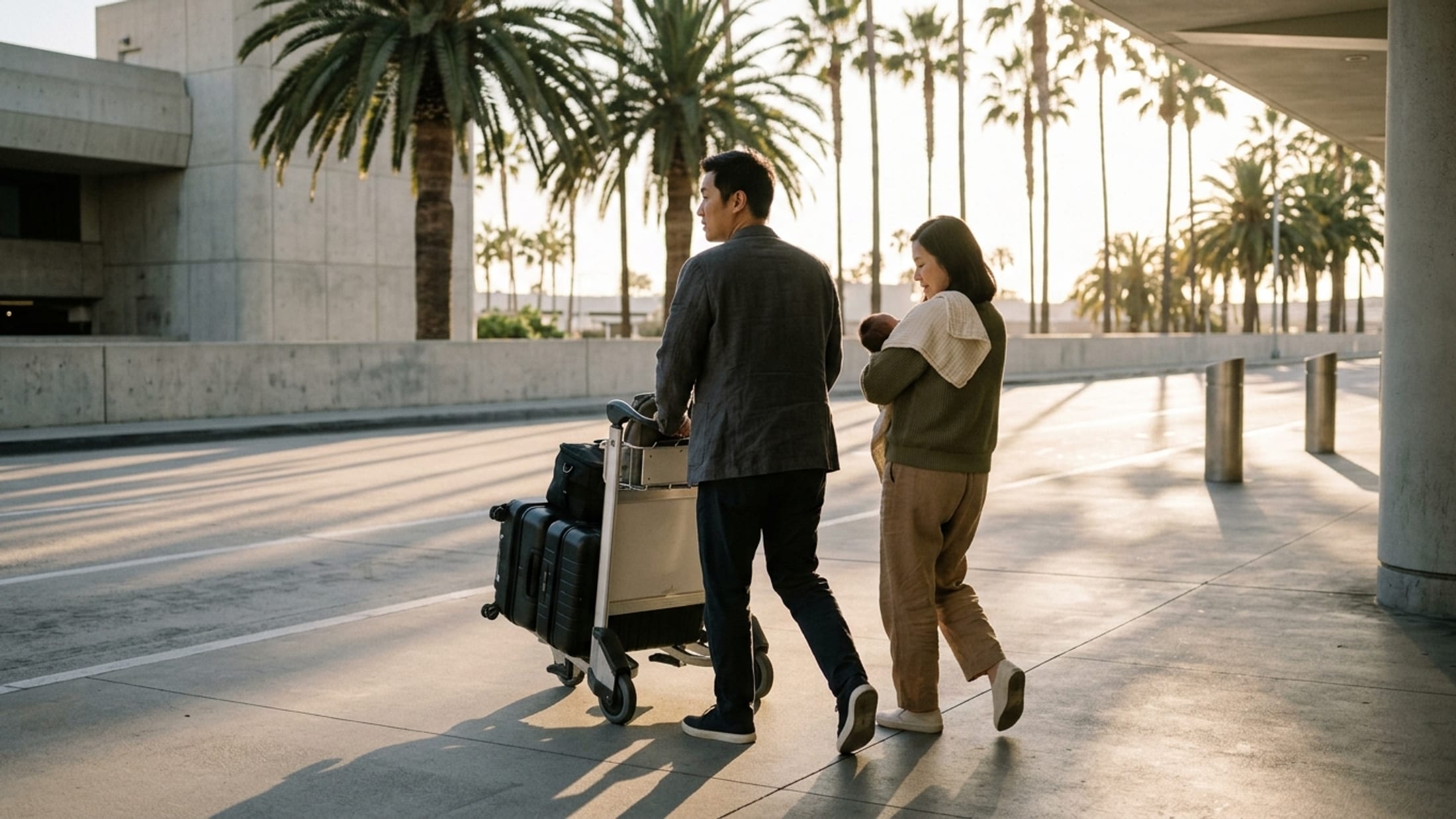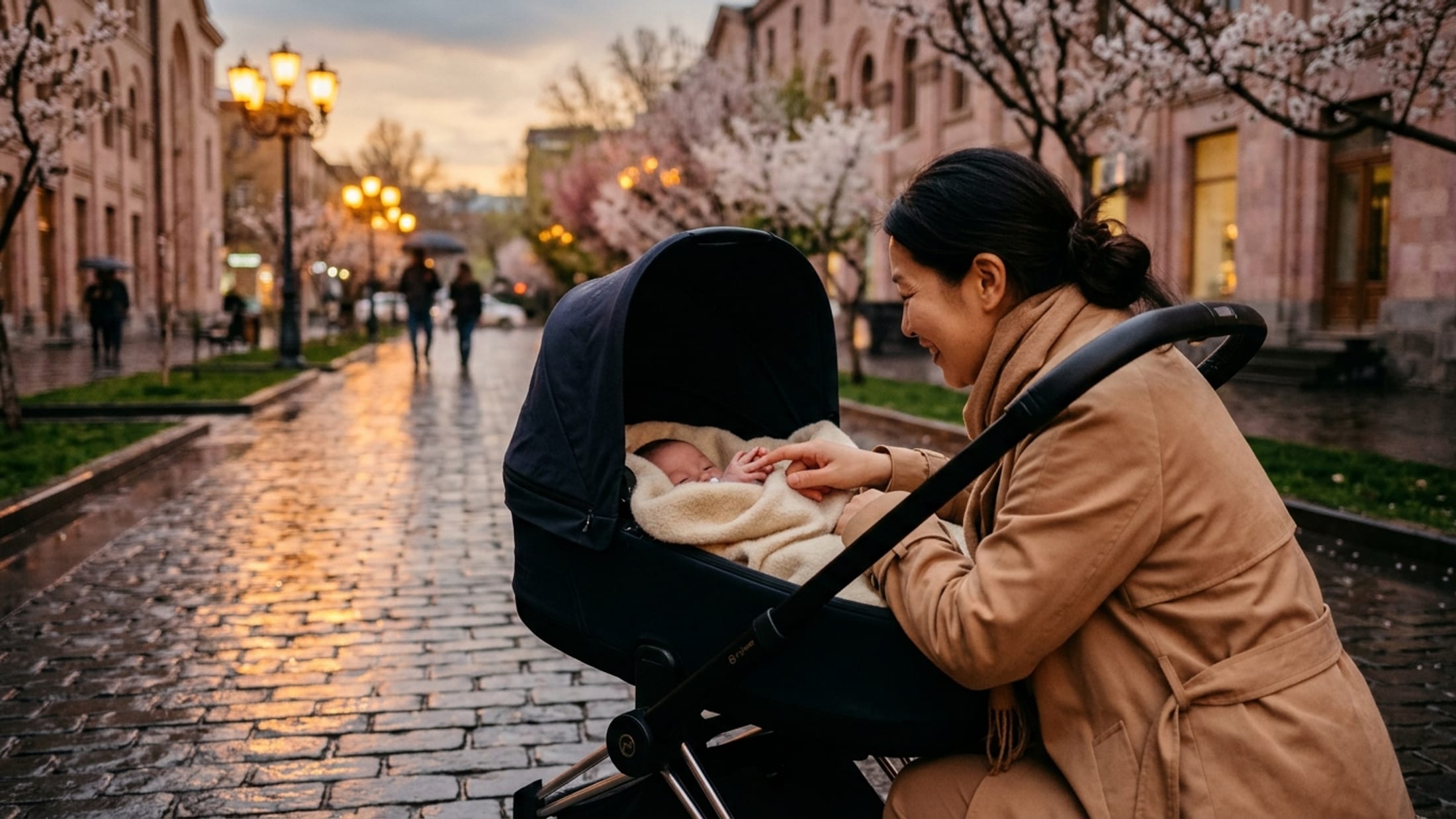
Characters and events in this piece are composite illustrations drawn from typical cross-border journeys; all names are pseudonyms.
Fifteen minutes into the introductory legal zoom, Han Xiao was leaning back twirling a pen when the immigration attorney read out "four years, seven months, and nineteen days" — and the pen dropped onto his desk pad.
Living north of downtown Chicago, Han Xiao and his wife Fang Yu had planned for gestational surrogacy since before their wedding; diagnosed at twenty with congenital Mayer-Rokitansky-Küster-Hauser syndrome, Fang Yu had healthy ovaries and no uterus. To Han Xiao, the paperwork seemed the easiest piece on the board: he had immigrated at ten and held a blue US passport since his family naturalised when he was fourteen, Fang Yu held a PRC passport and a US green card, and the embryos were created from their own sperm and ova. Surely a biological child of a US citizen simply picked up a US passport at the embassy in Yerevan?
The age-fourteen line nobody reads
The catch lay in where Han Xiao had spent his late teens and twenties. The year Han Xiao turned fourteen, his father transferred to Hong Kong; Han Xiao finished secondary school there, completed university and five years of work in Shanghai, and only moved back to Chicago at twenty-nine to trade derivatives.
Pulling section 301(g) of the Immigration and Nationality Act onto the shared screen, the attorney highlighted the rule governing married couples made up of one US citizen and one non-citizen spouse (including a green card holder): before the day the child is born, the US citizen parent must have been physically present inside the United States for five cumulative years, at least two of them after turning fourteen.
Once every international trip back to Asia was subtracted from his post-twenty-nine residency and combined with his childhood years in California, Han Xiao stood four months and eleven days short. Catching it before transfer saved them from a cliff: physical presence locks permanently at the moment of birth. Falling short by even forty-eight hours leaves a consular officer zero discretion to approve a CRBA, forcing families into a sudden Form I-130 filing and months stranded abroad.
Utility bills, tax transcripts, and snow in Lincoln Park
Shaken as she was hanging up, Fang Yu was grateful the cold water arrived before a single medical invoice was paid. Their coordinator and attorney rebuilt the calendar that afternoon: stimulation and surrogate matching moved ahead on schedule, while Han Xiao cancelled two planned business trips to Hong Kong and London and stayed planted in Illinois to bank every domestic day.
By week thirty-two of the pregnancy, he had cleared the five-year statutory mark with six full weeks to spare. Before flying to Yerevan, they bound IRS tax transcripts, ComEd electric bills, W-2s, and his childhood California elementary-school records into a tabbed folder cross-referenced against CBP travel history.
Their son was born in mid-January at seven pounds three ounces. At the US Embassy in Yerevan, the consular officer spent twenty quiet minutes checking dates down the tabbed ledger with a pencil, looked up with a nod, and signed the approval. Fourteen days later, a five-year US passport arrived.
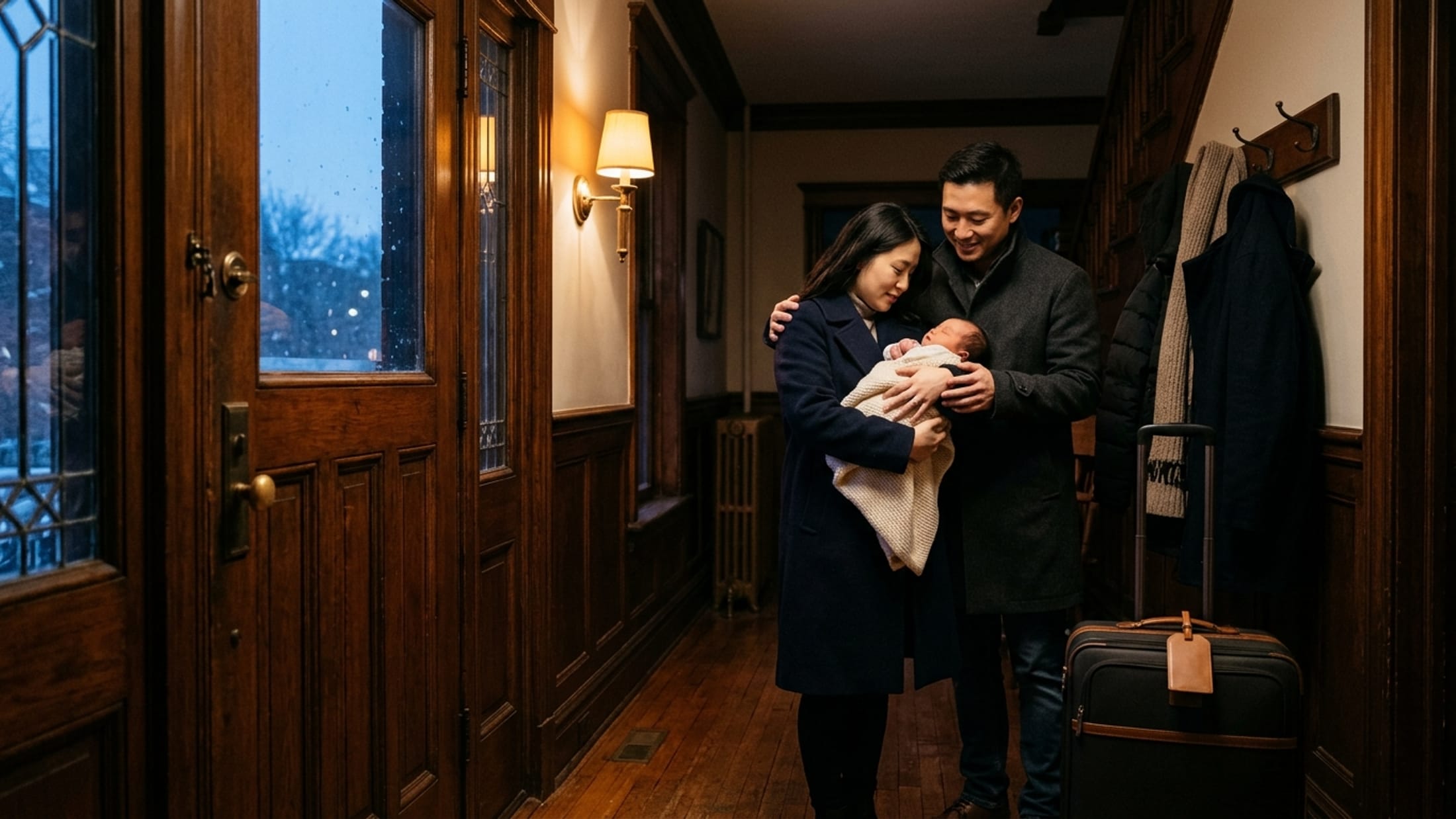
Light snow was falling when their flight landed at O'Hare in early February. Stepping inside their Chicago brownstone, Han Xiao set his carry-on down by the doormat and clicked on the warm hallway sconce. Neither of them took off their damp wool coats; with snow drifting past the frosted transom glass behind them, they stood shoulder to shoulder in the narrow wooden hall looking down at their son blowing tiny bubbles inside his fleece bunting.
Disclaimer: this article is general information and not legal or medical advice. Before making any decision on the legal matters discussed, consult a licensed attorney in the relevant jurisdiction; for medical matters, consult a physician.