Characters and events in this piece are composite illustrations drawn from typical cross-border journeys; all names are pseudonyms.
At Immigration Booth 7 in Los Angeles International Airport, Song Zhixing slid his daughter's burgundy PRC passport — holding a crisp F2A immigrant visa foil — under the glass beside the sealed consular packet. The CBP officer reviewed the papers, stamped the temporary I-551 endorsement onto the visa page, and waved them through in under twelve minutes.
Walking past the baggage carousel, Meng Yao glanced back toward the inspection hall and murmured, "Thank goodness we didn't gamble on boarding without a visa."
Cold water before signing
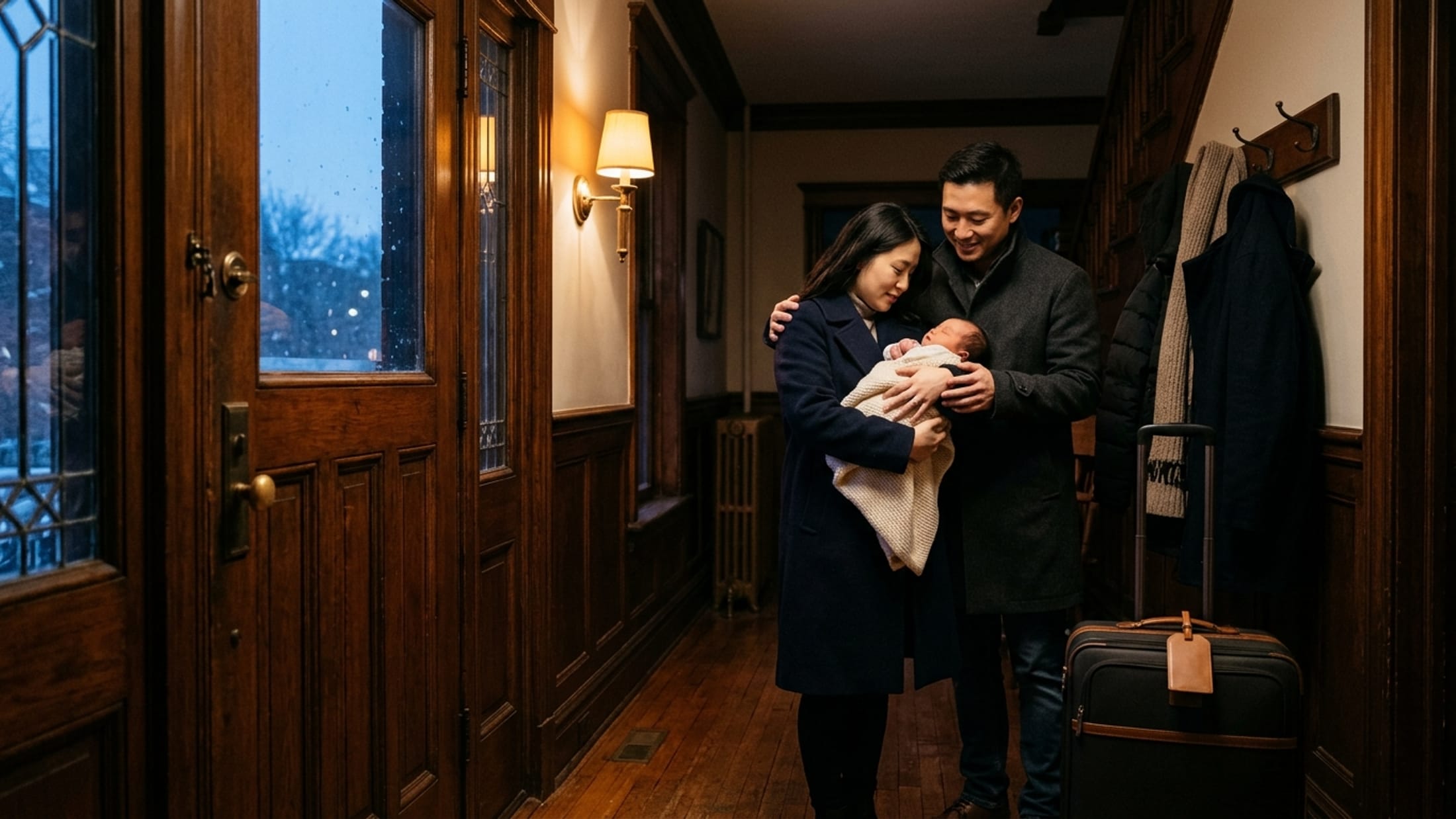
Both cardiovascular-device engineers in Irvine, Zhixing and Meng Yao had waited six years in the EB-2 queue and held green cards for only two years — far short of the five-year naturalisation mark. Bilateral salpingectomy and severe intrauterine adhesions ruled out carrying a pregnancy herself.
Before looking into Armenia seriously, they had saved screenshots from an online forum claiming green card parents could simply board a flight home with a newborn and ask CBP for an NA3 port-of-entry waiver under 8 CFR § 211.1(b)(1).
During their pre-contract legal check, an ART-experienced US immigration lawyer stopped that plan cold. Sharing the literal text of 8 CFR § 211.1(b)(1) on screen, counsel pointed out that the regulation covers a child born during the temporary visit abroad of an LPR mother who gives birth; in gestational surrogacy, the surrogate delivers the child, leaving airlines and border officers full authority to refuse visa-free boarding or entry. Getting stranded at a transit gate with a newborn was not a risk worth taking.
Planning Form I-130 and remote-work windows upfront
With naturalisation still three years away, counsel mapped the straightforward compliant route: filing Form I-130 under category F2A (charged to Armenia's Rest-of-World allocation, subject to the monthly Visa Bulletin) and coordinating alternating employer remote-work windows with family support while consular processing ran its course.
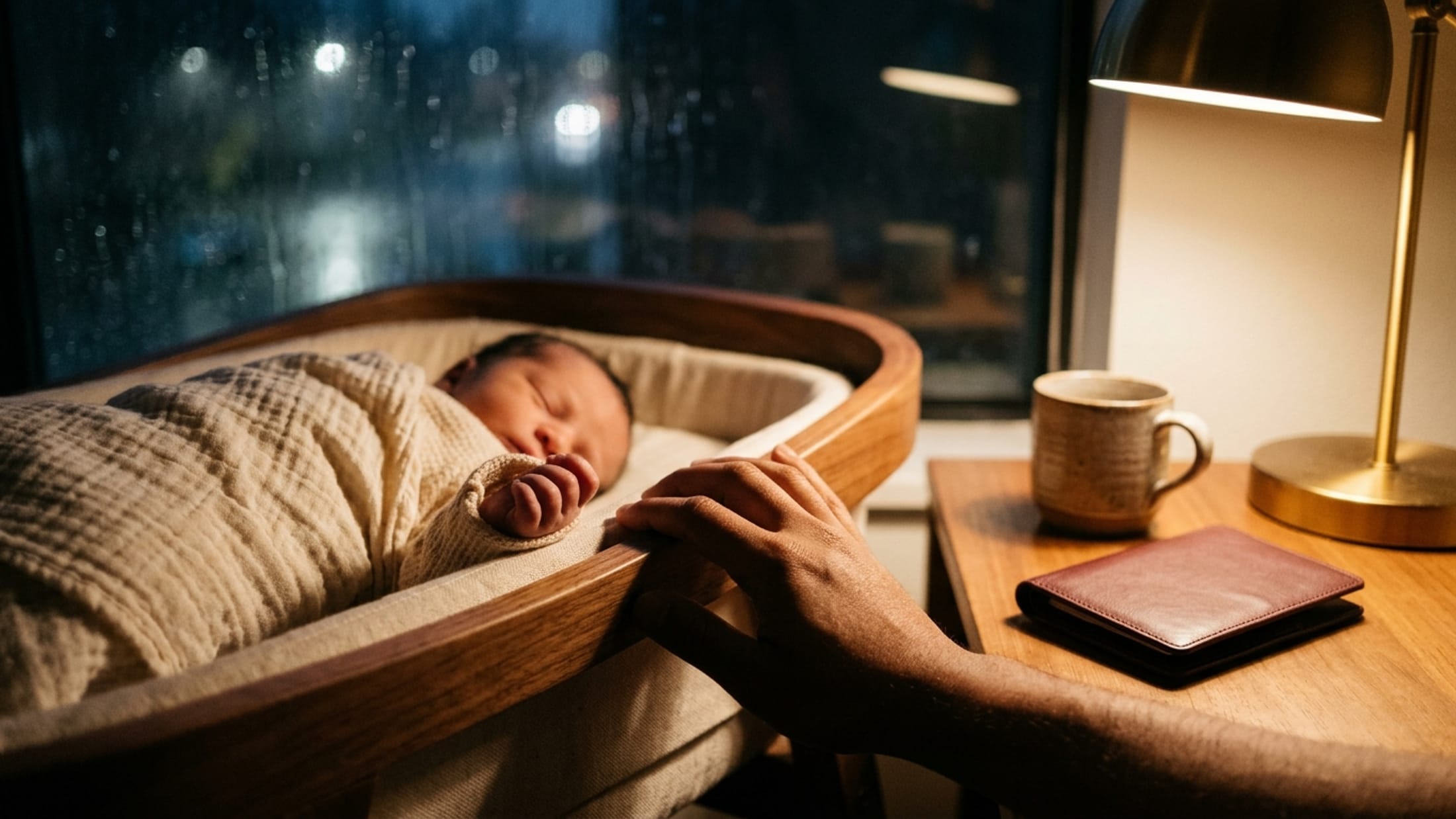
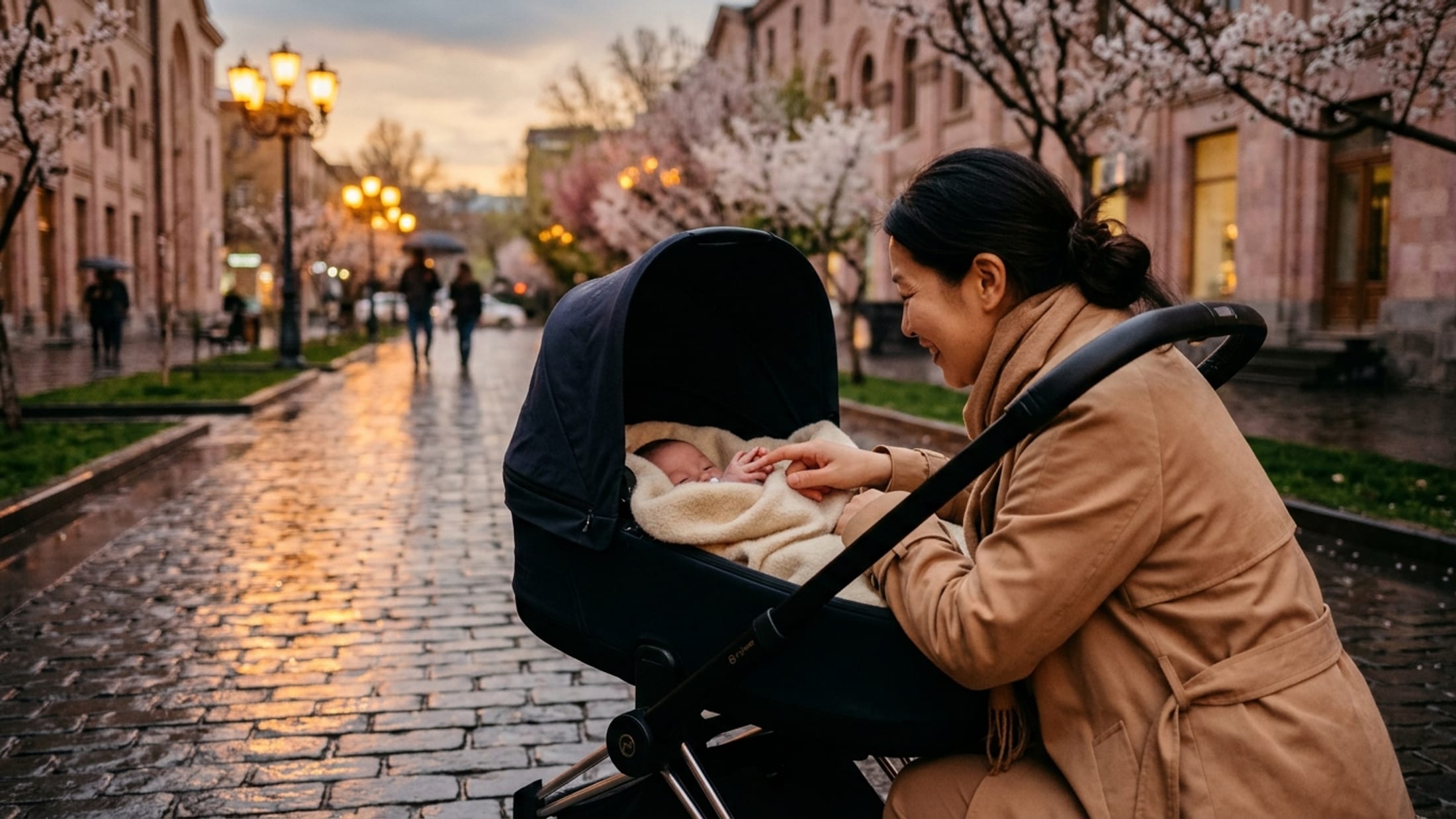
After delivery in Yerevan, they secured the Apostilled Armenian birth certificate, DNA verification, and PRC Ordinary Passport, then filed Form I-130 and assembled the I-864 sponsorship packet cleanly through NVC. Following counsel's guidance, each parent kept every single trip abroad strictly under six months so permanent-residence continuity was never questioned (knowing a Form I-131 Re-entry Permit is required for absences approaching a year), alternating employer remote-work windows with family support. Neither parent lost a job, and nobody spent a single night wondering whether an airline desk would deny boarding.
Noon sun beneath the palms
The evening the F2A visa foil arrived, Meng Yao deleted the old forum screenshot from her phone. Counsel noted one welcome milestone ahead: once either parent naturalises three years from now while their daughter is under eighteen and residing in the US as an LPR, she will acquire US citizenship automatically under INA § 320.
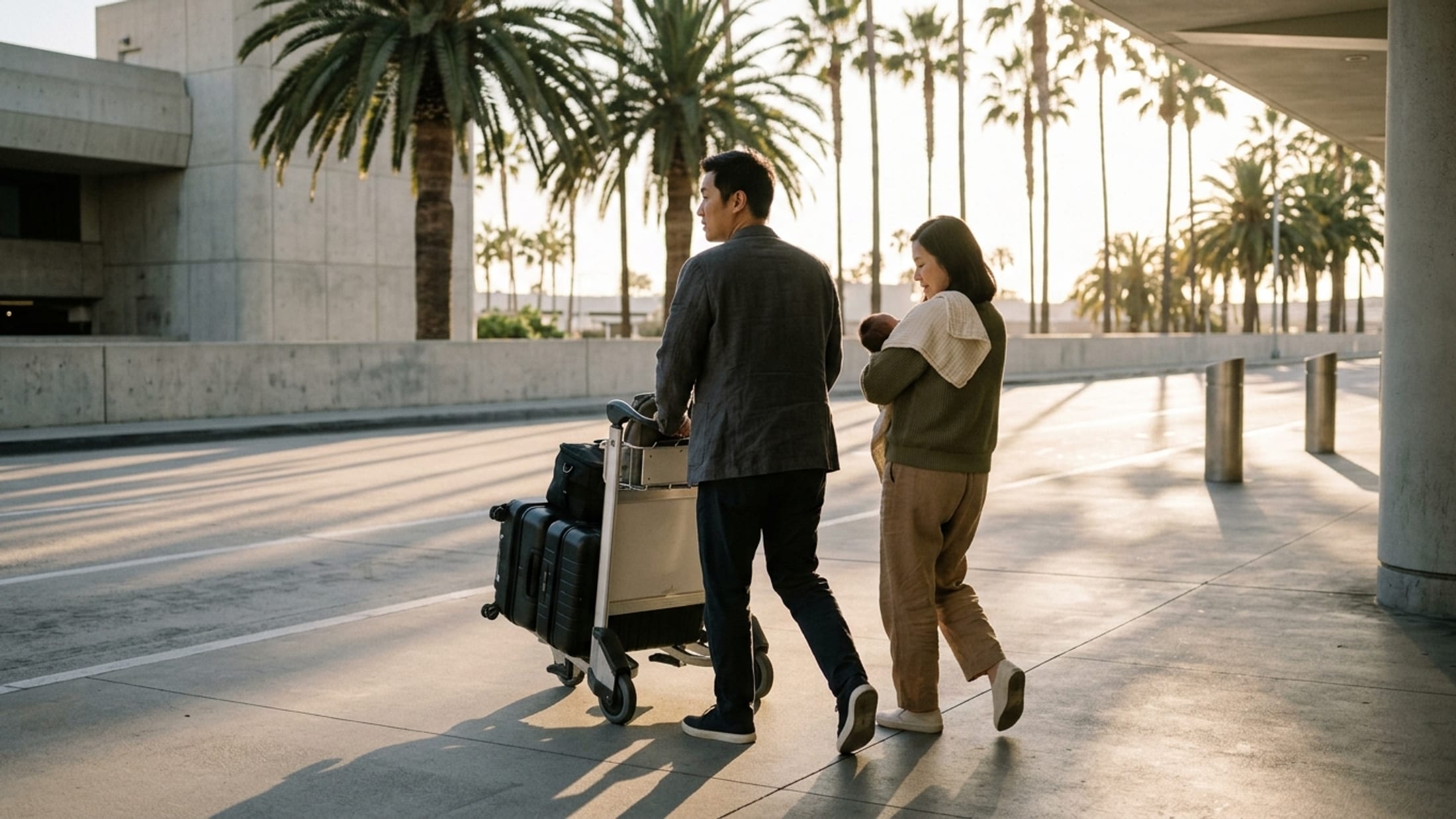
Rolling two suitcases out through Tom Bradley International Terminal into bright Southern California noon, palm shadows swaying across the concrete kerb, Meng Yao angled her shoulder to shade the baby's eyes. Zipping the passport folder shut, Zhixing exhaled — trading a risky shortcut for a few months of patience had bought them a completely uneventful walk home.
Disclaimer: this article is general information and not legal or medical advice. Before making any decision on the legal matters discussed, consult a licensed attorney in the relevant jurisdiction; for medical matters, consult a physician.